
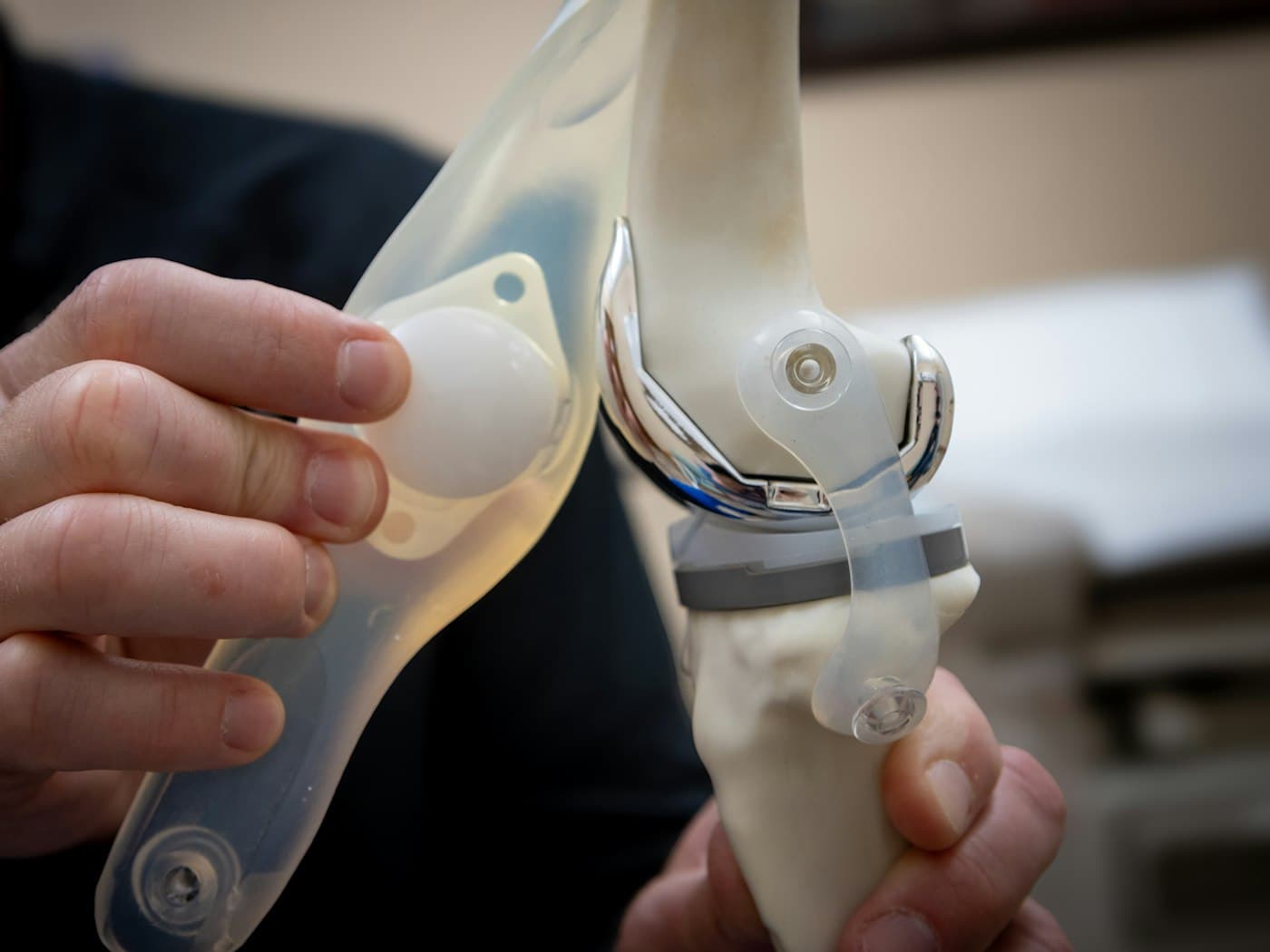
Orthopedics
AI receptionist for orthopedic practices. Referrals become visits.
Ortho groups field heavy referral and patient call volume across many providers and locations. 2Care answers every call, books to the right provider, and routes urgent cases without overwhelming your front desk.
Get a demo
30 minutes, on your own call flows.
In practice
Built for how orthopedics actually runs.
In high-volume ortho, misrouted and missed calls cost real cases. 2Care gets every caller to the right provider, fast.
- High
- referral and call volume across multiple providers
- Multi-provider
- scheduling that is hard to staff manually
- 24/7
- coverage including after-hours injury calls
This week · filling up
LiveMon
Tue
Wed
Thu
Fri
2 slots booked while you read this
Trusted by healthcare providers across the US, Europe and India












On the phone
The workflows orthopedics practices actually run.
Not generic scheduling. The specific jobs that fill your day and quietly cost you revenue when they slip.
01
Post-op follow-ups booked as a series
Two weeks, six weeks and twelve weeks scheduled in one call at the right intervals for the procedure, rather than three separate calls the patient has to remember to make.
02
Imaging sequenced before the consult
When a visit requires an X-ray or MRI first, the imaging is booked with enough lead time that the results are in the chart when the patient walks in.
This week · filling up
LiveMon
Tue
Wed
Thu
Fri
2 slots booked while you read this
03
Injection series at the correct spacing
Repeat injections are booked against your minimum interval, so a patient cannot end up scheduled too early.
04
Surgical scheduling and pre-op instructions
Surgical dates coordinated, pre-op instructions delivered by voice and text, and confirmation captured so nothing is a surprise on the day.
Anything clinical or urgent is escalated to your team rather than handled by the agent.
Integrations
Writes back into the systems you already run.




See it work
What a orthopedics patient hears when they ring at 8:47 PM.
The practice is closed. The call is answered on the first ring, then booked, confirmed and written back before anyone arrives in the morning.
One day on the line
What an ortho front desk is holding at once.
02
Imaging authorisation chasing
MRI and CT orders that cannot be scheduled until an authorisation clears, and patients ringing to ask whether it has.
03
Post-operative questions
Weight bearing, wound appearance and dressing questions, arriving on the same line as a booking request.
The referral path
Where a referral stops.
Each of these steps is a place a referral goes quiet. None of them requires a clinician to keep it moving.
From referral to booked visit
Live- Referral arrives, by phone or fax
- Referring provider and body part captured
- Prior imaging and attempts recorded
- Patient called and offered a time
- Booked to the right subspecialty
The agent moves a referral through every step that is administrative, and hands you the ones that are not.
Where the line sits
Post-operative calls are the ones it hands over.
In orthopedics the most dangerous call to answer confidently is the one about a wound or a weight bearing restriction, and it arrives on the same line as everything else.
Finished on the call
- Referral intake with referring provider, body part and prior imaging as fields.
- Booking to the right surgeon, subspecialty and site.
- Pre and post-operative appointments booked at the correct length.
- Telling a patient the status of an authorisation you have recorded.
- Rescheduling around a surgery date change across the whole series.
Never attempted, always escalated
- Advising whether a wound looks as it should.
- Answering a question about weight bearing or restrictions.
- Judging whether a new injury needs to be seen today.
- Interpreting an imaging result or a report.
- Confirming that a delayed authorisation will be approved.
Post-operative clinical questions are routed to your team with the patient identified and the surgery on record, so whoever calls back is not starting from nothing.
The whole front desk
A referral, and everywhere it can stall.
Fewer than half of orthopedic referrals complete scheduling. Almost none of the reasons are clinical. Step through one and see where they stop.
An injured patient you have not spoken to yet.
Referrals arrive by phone, by fax and from emergency departments. The ones that fail are rarely refused. They are simply never followed up.
Captured as structured detail
Referring clinician, body part and mechanism written to the record rather than left in free text.
The patient actually called
Contact is attempted repeatedly on a schedule rather than abandoned after one unanswered ring.
Prior imaging noted
What has already been done and where, so an order is not repeated and an approval is not held up.
Cover confirmed early
Insurer and member details taken at first contact rather than discovered on the day of the visit.
The difference
A referral that nobody chases is a referral you did not receive.
Fax, voicemail and a callback list
2care
A referral arrives
Joins a pile to be worked through
Captured as fields and the patient called
Patient not reached
Falls off the list after one attempt
Retried on a schedule you set
Acute injury call
Holds, then rings a competitor
Answered immediately, routed on your protocol
Authorisation query
Interrupts staff mid task
Answered from the status you recorded
Surgery date moves
Each linked appointment moved by hand
The series rescheduled in one pass
Straight answers
What ortho groups raise.
Our referral coordinators already do this.
They do the parts that need judgement. What this removes is the volume around it: the third attempt to reach a patient, the status question, the rebooking after a date change. Those are what stop coordinators getting to the referrals that need them.
Post-operative calls are far too risky to automate.
Which is why they are on the refuse list. The agent identifies the patient and the procedure and hands the call straight over, so whoever rings back is not starting cold.
Prior authorisation is the real bottleneck, not the phone.
Submitting it is a billing job and stays one. What the phone contributes is the documentation captured at first contact, and absorbing the status calls that currently interrupt the person working the queue.
Related
The same agent, doing a different job.
Each page below covers one job end to end: how the call goes, what gets written back, and where the agent stops and your team takes over.
Orthopedic groups ask
Referrals, imaging and the phone.
It handles the call side of the referral: contacting the patient, capturing the detail and booking the appointment. Where your system surfaces a faxed referral as a task, that patient can be called and booked the same way as a phoned one.
From the body part and the mechanism the caller describes, mapped to the surgeons and appointment types your system holds. A shoulder and a knee do not reach the same list unless you have said they should.
They go to your team. The agent takes the detail, identifies the patient and the procedure, and escalates. It does not comment on a wound, a dressing or a weight bearing restriction.
It can tell them the status you have recorded. It does not contact payers, predict an outcome, or suggest that a pending authorisation will be approved.
Indirectly, by capturing prior imaging and previous conservative treatment on the first call as structured fields. Missing elements are the usual reason an orthopedic imaging authorisation is refused.
The linked pre and post-operative appointments are rescheduled as a series rather than one at a time, which is where most of the manual work sits today.
Epic, athenahealth, ModMed, NextGen and eClinicalWorks among others, with each integration page covering what is read and what is written for that system.
Yes. Providers, locations and appointment types are mapped during setup, so a caller is offered the right surgeon at the right site without your team redirecting them.
See 2Care answer your orthopedics calls. Book Demo.
30 minutes, on your own call flows. No commitment.
- 18 specialties covered
- ·Live in weeks, not months
- ·HIPAA, GDPR and DPDP