Open Dental integration
An AI receptionist for Open Dental, live not exported.
Practices that chose control over convenience, and will not accept a tool that imposes its own way of scheduling.
Writing to Open Dental
Real time, on the call
Writing…
Encrypted in transit, audit-logged
Who runs Open Dental
Open Dental practices configured their system deliberately, their own operatories, providers, appointment types and blockouts. They did not choose control in order to hand it to a vendor.
The problem
What is actually breaking.
The things practices tell us cost them the most, in the order they raise them.
Tools want to impose their own model
Most scheduling automation assumes a generic calendar and quietly ignores how you actually run.
Recall is defined but not worked
The definitions are there. The calls are not.
Emergency handling depends on who answers
Triage quality varies with whoever picks up the phone.
After-hours calls disappear
Evenings and weekends go to voicemail, and dental patients in pain do not leave one.
How it connects
Real time
Written while the patient is still on the line. Every write logged and reversible.
How 2care solves it
One platform, not a point fix.
Inbound answering, outbound outreach, write-back and escalation are the same agent - which is why the whole problem moves rather than one part of it.
Your configuration is the source of truth
Operatories, providers, appointment types and blockouts are read as you set them, never overridden.
Recall from your own definitions
Outbound calling runs on the recall types and intervals already in your setup.
Consistent triage, every call
Urgent presentations go to held slots or a clinician the same way every time, regardless of hour.
Answered at any hour
Nights and weekends are covered on the same number.
Scope
What it touches in Open Dental.
Three passes. If you host your own database, the third is the important one.
- Operatory and provider
- Operatory and provider availability in Open Dental, live.
- Appointment type
- Appointment types and lengths, as your own configuration defines them.
- Recall status
- The recall list, so outbound calling uses your data rather than a copy.
- Patient record
- Patient records, to match rather than duplicate.
- Benefit detail
- Insurance plan details already stored.
Straight answers
What Open Dental practices ask before connecting it.
Does it work with a self hosted Open Dental server?
Yes, whether the server sits in the practice or with a hosting provider. Your onboarding specialist sets the connection up during go live.
We configured our scheduling ourselves. Will it follow that?
Yes, because it reads your configuration rather than imposing one. It can only offer what your own operatory and provider rules already allow.
Is anything installed on our server?
No. The connection is made to the database through its supported interface, and nothing is added to the machines your practice runs.
We are not granting broad write access to Open Dental.
Nor should you. Operatory and provider scheduling rules exactly as you configured them yourself. Clinical documentation sits outside the scope entirely.
The difference
What changes on the Open Dental phone.
A practice that picked Open Dental for the control will not welcome a tool that has views on how its diary should run.
How it runs today
With 2care on Open Dental
Tools want to impose their own model
Most scheduling automation presumes a one-size calendar and simply overlooks how your practice really operates
Operatories, providers, appointment types and blockouts are taken exactly as you defined them, and never overwritten
Recall is defined but not worked
The definitions are there
Outbound calling follows the recall types and intervals that already exist in your configuration
Emergency handling depends on who answers
How well a call is triaged depends on who happens to answer
Emergencies are sent to reserved slots or to a clinician in the same manner every time, whatever the hour
After-hours calls disappear
After work and at weekends calls fall to voicemail, which dental patients in pain will not use
The same number stays answered through nights and weekends
At a glance
The Open Dental connection, in the terms a review will ask about.
Practices on Open Dental set their system up on purpose, laying out the operatories, providers, appointment types and blockouts themselves. Having chosen that control, they are not about to sign it over to a vendor.
Go live
Weeks, not quarters.
Most practices on Open Dental are live inside a few weeks of authorising the connection.
Authorise the connection
Your Open Dental administrator approves API access. Nothing is installed, and nothing changes about how your team uses Open Dental.
Map your rules
We map your providers, locations, appointment types, booking rules and escalation paths - the things that make your schedule yours.
Test, then go live
We run your real scenarios against a test environment with your team watching, fix what surfaces, then switch the line over and monitor.
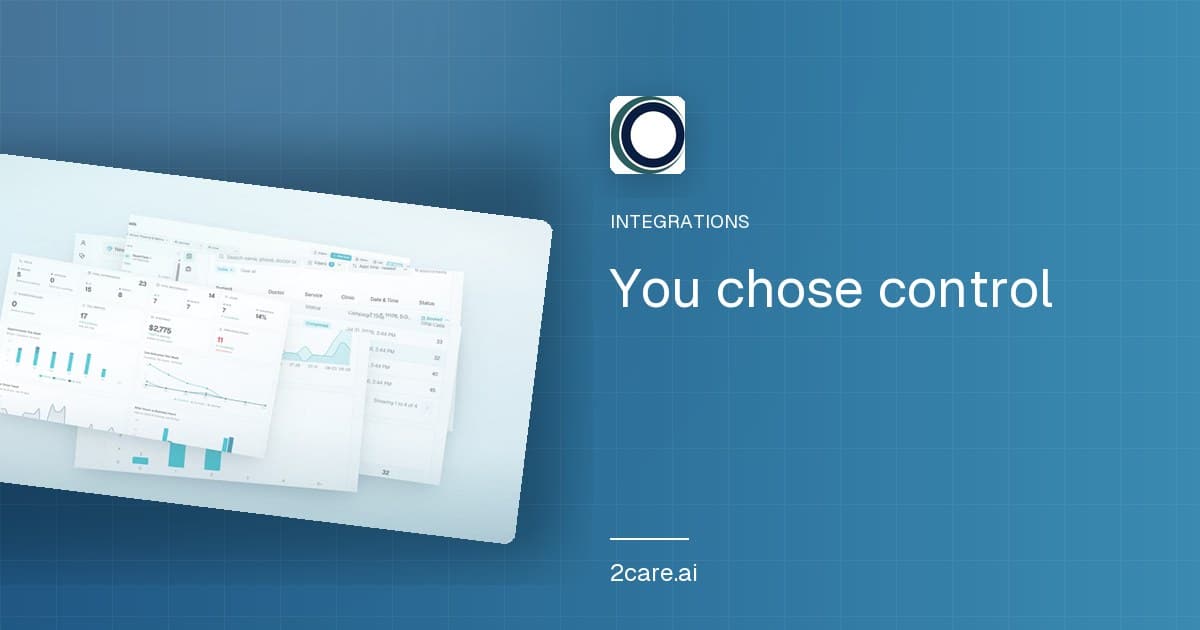
See it work
A call, a booking, and a write-back into Open Dental.
Recorded end to end. The system on screen is not yours, but the flow is the one described above.
Before you connect it
Questions about Open Dental.
Yes. Your operatories, providers, appointment types and blockouts are taken just as you set them up and honoured on each call.
Yes, outbound recall works from the definitions that already live in your configuration.
People search it both ways. A Open Dental answering service describes covering the phone. A Open Dental integration describes what connects to what. Here they are one product: cover for the line that reads your diary and writes the booking straight into it.
Operatory and provider scheduling rules exactly as you configured them yourself, confirmed while the caller is still speaking.
No. Callers are matched against what Open Dental already holds before anything new is created.
Yes. Kept against the patient in your own database, which is where a self hosted practice expects it.
See 2care book into Open Dental.
30 minutes, on your own call flows. No commitment.
- 18 specialties covered
- ·Live in weeks, not months
- ·HIPAA, GDPR and DPDP